
Sound shaping
Precise control of resonance, damping and the character of the drum sound is one of the key elements of the recording process. The sound that later reaches the microphones is already shaped at the preparation stage. Depending on the track, a different drum response, a different sustain length and a different overall energy of the kit are required.

A properly chosen drum character allows it to fit better within the arrangement, style and dynamics of the track. Small changes in damping, tuning or instrument response can dramatically alter the perception of a recording. It is at this stage that the foundation of the sound is created, which later in production requires only subtle adjustments.
Damping and sound shaping
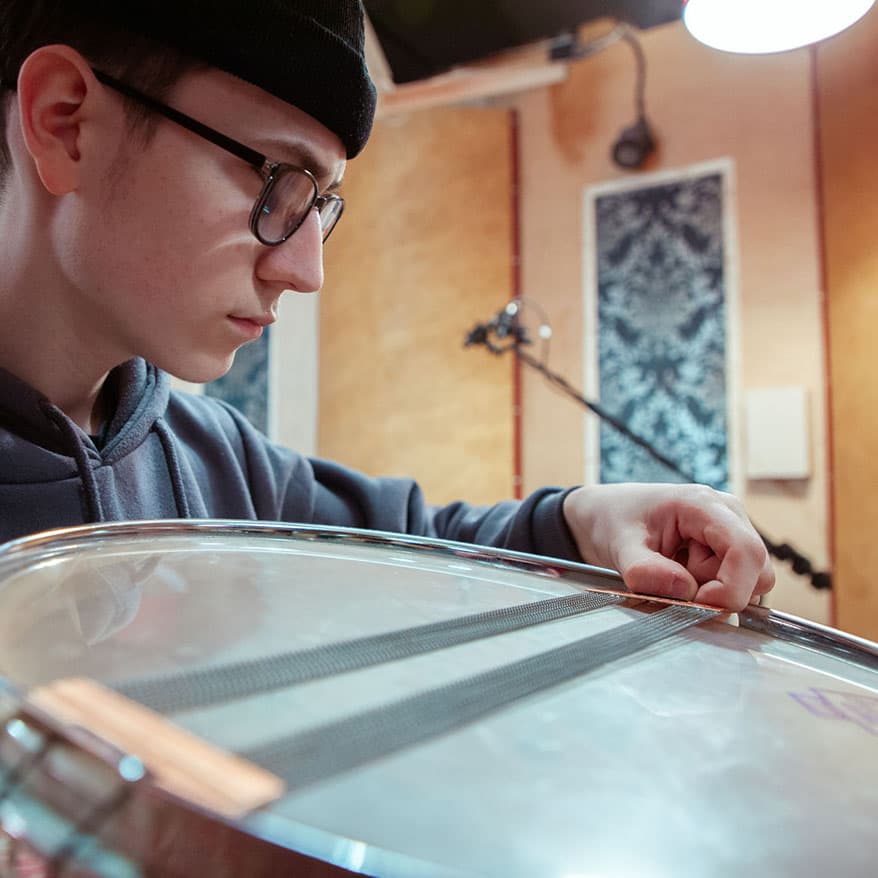
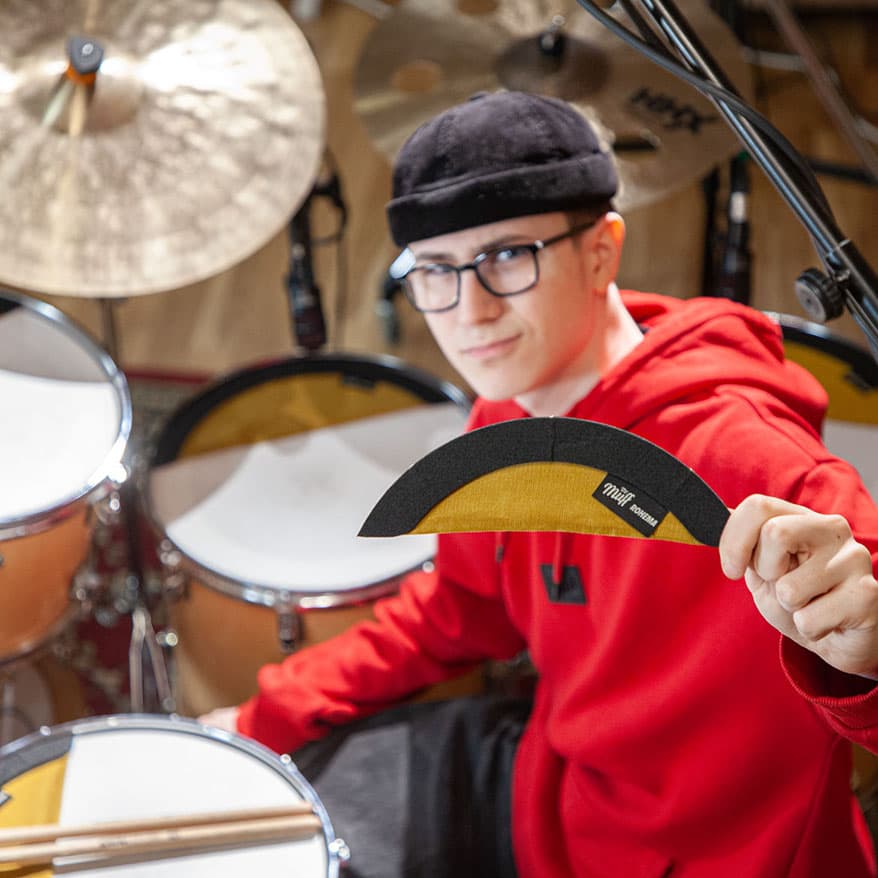
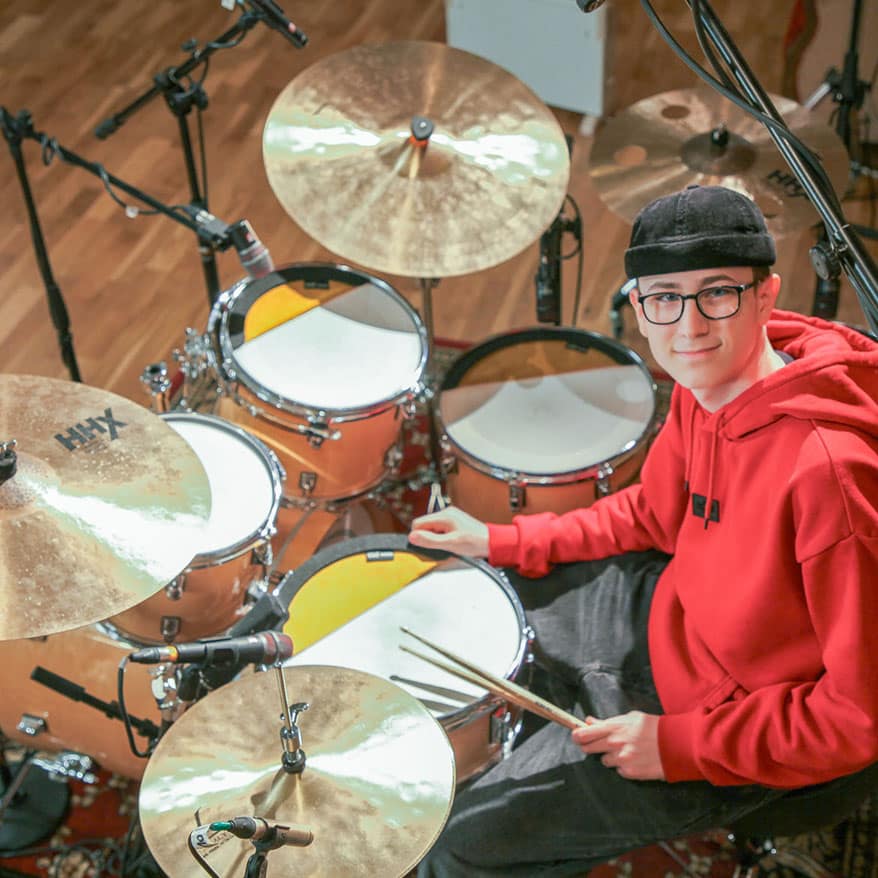
In recording sessions, various tools are used to shape the drum sound, including accessories that dampen and modulate it, such as solutions from Mr. Muff. They allow precise control over sustain length, attack and drum character, without losing the natural qualities of the instrument. This makes it possible to move smoothly between a tight, modern sound and a more open, vintage character of the kit.
Different types of dampening tools make it possible to match the instrument’s response to a specific musical style – from subtle control of sustain to a tight, focused and controlled sound used in modern productions.

Sound experiments
Shaping the drum sound is not limited to dedicated accessories. In practice, everyday items are also used – fabrics, straps, chains, metal elements or non-standard weights. These solutions make it possible to achieve unique sounds and tailor the character of the instrument to a specific track.
Combining different materials and unconventional solutions often leads to new, non-obvious tonal colours. This makes it possible to create sounds that are difficult to achieve using standard methods.
Tuning and resonance control
Experimenting with tuning and combining different damping techniques also plays an important role. Changing head tension, applying localised weight to the membrane or using several methods at once often results in unconventional yet highly musical effects.
Control of resonance and tuning allows the instrument to be precisely matched to the arrangement and the character of the production, and helps position the drums in the mix already at the recording stage.